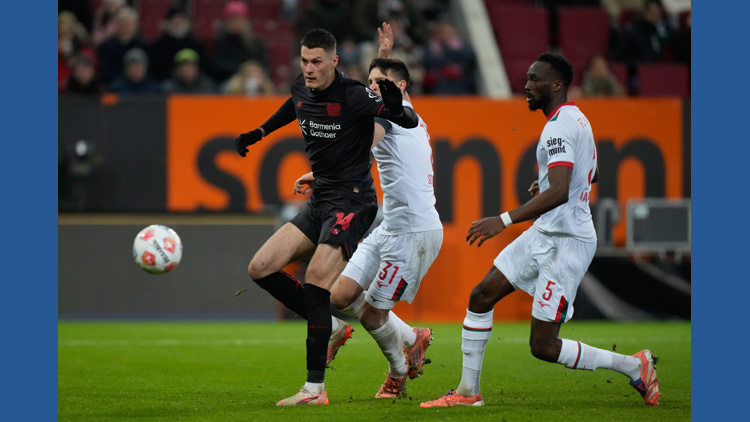
High possession without goals is one of the most revealing imbalances in modern Bundesliga football. It usually signals teams that control territory and tempo yet lack either penetration, shot quality or finishing to convert that control into actual scoring. Without live access to current league stats for this piece, the focus here is on how to recognise these profiles, why they emerge, and how they behave across different match situations.
Why “High Possession, Low Goals” Is a Meaningful Category
Treating “high possession, low scoring” as its own category makes sense because ball control and output are only loosely linked. Some Bundesliga teams routinely record well over 55–60% possession but generate modest xG and goal totals, indicating sterile circulation rather than incisive attacking. In these cases, the cause is a style built on patient build-up and security-first passing that rarely pierces the last line.
The imbalance becomes especially clear when possession metrics are compared with shot volume and chance quality. Teams that sit high in the possession table but mid-table or lower in goals scored or xG created are not simply “unlucky”; they are structurally better at keeping the ball than at using it, which has direct consequences for match outcomes and league position.
Structural Traits Shared by High-Possession, Low-Goal Sides
Teams that dominate the ball but struggle to score usually share three structural traits. First, their build-up emphasises short passing between centre-backs and holding midfielders, keeping the ball in safer zones where turnovers are less costly but also less dangerous for opponents. That inflates possession percentages while limiting entries into the penalty area.
Second, they often lack vertical runners or forwards who attack space behind defences, so opposing back lines feel comfortable holding their shape rather than dropping, compressing the space in front and encouraging sideways circulation. Third, shot selection tends to skew toward low-value attempts from distance or crowded central areas because the final pass that would create a clear chance rarely arrives.
Table: Indicators of a “Possession-Rich, Goal-Poor” Bundesliga Profile
Breaking the profile into indicators turns a general idea into a testable checklist, even when specific teams change from season to season.
| Indicator | Possession implication | Attacking implication |
| Average possession ≥ 55–60% | Team routinely controls the ball and territory | Opponents defend deeper, transitions become harder |
| Passes per defensive action (PPDA) high | Opponents face long build-up sequences when pressing | Build-ups are slow; fewer fast attacks into disorganised blocks |
| Low xG per shot | Many attempts from poor locations or under pressure | Difficulty creating clear chances despite time on the ball |
| Shots per possession relatively low | Long spells without direct attempts on goal | Volume does not match territorial dominance |
| Few deep runs or through-ball attempts | Preference for safe passes in front of the block | Back lines stay set; limited one-on-ones with the keeper |
When several of these indicators align, the underlying issue is not just finishing luck but a structural difficulty in turning control into penetration.
Mechanisms: How Bundesliga Styles Produce Possession Without Goals
In the Bundesliga, where pressing and vertical transitions are common, teams that choose a more patient, circulation-heavy style can end up with the ball largely because opponents are happy to sit off. The pressing side waits for predictable passes into midfield to spring traps, while the possession side recycles the ball through defenders to avoid risk.
If the ball-dominant team lacks dynamic one-on-one players on the wings or creative passes between lines, their attacks become easy to read: full-backs advance, midfielders shuffle sideways, and forwards receive mostly with their back to goal. This predictable pattern lets compact defences stay organised, meaning the possession side has to be unusually precise to create clear chances. When that precision is missing, the result is high possession, low threat.
Conditional Scenarios Where the Problem Becomes Acute
The disconnect between possession and goals becomes most obvious under specific match conditions. Against low-block opponents fighting relegation, high-possession teams may spend long stretches circulating around the box without prising open clear opportunities, creating the perception of dominance without reward.
When chasing a deficit, the same teams can see their possession share rise further as the opponent retreats, yet shot quality and danger may actually fall because the defensive block becomes even denser. Conversely, against higher-ranking pressing teams, their possession may drop slightly but the chances they do create can be of better quality if the opponent leaves space in behind. That contrast shows how context-dependent the possession–goals relationship can be.
UFABET, Odds Interpretation and Reading High-Possession, Low-Goal Profiles
During the decision-making process on a football betting website or betting platform such as ยูฟ่า168, high-possession teams can be easily overvalued if one looks only at ball control and passing numbers. Markets and users might assume that “dominance” in possession translates directly into win probability and goal expectation, leading to shorter prices on favourites whose attack is actually blunt against compact blocks. A more grounded interpretation compares possession stats with xG, shots and historical performance against low-block opponents: if a team repeatedly posts 60%+ possession but modest xG in these matches, then pre-match odds or goal lines that assume a flood of goals are leaning too heavily on the ball-share story. Interpreting prices through this lens helps separate truly dangerous, front-foot sides from those whose possession is largely sterile.
List: Practical Tests for Identifying Bundesliga Teams That Keep the Ball but Fail to Score
A simple set of tests turns the concept into a repeatable evaluation method. Each test links measurable behaviour to the underlying cause of the imbalance.
- Compare possession vs goals and xG: check whether a club consistently ranks among the top sides in ball share but only mid-table in goals scored and expected goals; this gap is the primary red flag.
- Look at shot quality and location: examine how many shots originate from central, close-range areas inside the box versus long range; low central-shot share with many distance efforts indicates difficulty breaking lines.
- Evaluate speed of attacks: note whether the team frequently completes long passing sequences without attempting progressive passes; slow, U-shaped circulation around the block is a hallmark of sterile possession.
- Track performance against low-block opponents: focus on results and chance creation versus bottom-half teams that sit deep; persistent underperformance here confirms that the ball is being kept without being used incisively.
Interpreting these signals together gives a more reliable picture than relying purely on eye-catching possession percentages from match summaries.
Where the “High Possession, No Goals” Concept Breaks Down
The concept becomes unreliable when it is applied over very small samples or without considering opponent quality. A short run of games against defensive, low-block teams can depress goal and xG numbers temporarily, making a generally effective attack look toothless for a few weeks. Over a full season, however, sustainable patterns usually reassert themselves.
It also breaks down when ignoring finishing variance and set-piece impact. A team may create several good chances from open play and set-pieces but go through a spell of poor finishing or strong opposition goalkeeping, leading observers to blame “sterile possession” when the problem is execution, not access. In those phases, deeper metrics reveal that the team is getting into the right zones even if the scoreboard briefly says otherwise.
Summary
In the Bundesliga, teams that dominate possession yet struggle to score are usually not simply “unlucky.” They are sides whose structures favour safe circulation and territorial control over vertical penetration, leaving them short on clear chances despite impressive ball-share numbers. Their signatures include high possession, modest xG and goals, low-quality shooting locations, and repeated difficulties against compact, low-block opponents.
Understanding this profile requires moving beyond raw possession and passing stats to examine how quickly and where the ball moves, what kinds of shots result, and how those patterns hold up across different match states and opposition types. Seen through that lens, “high possession but cannot score” becomes a precise description of a tactical imbalance rather than a vague complaint about missed chances.