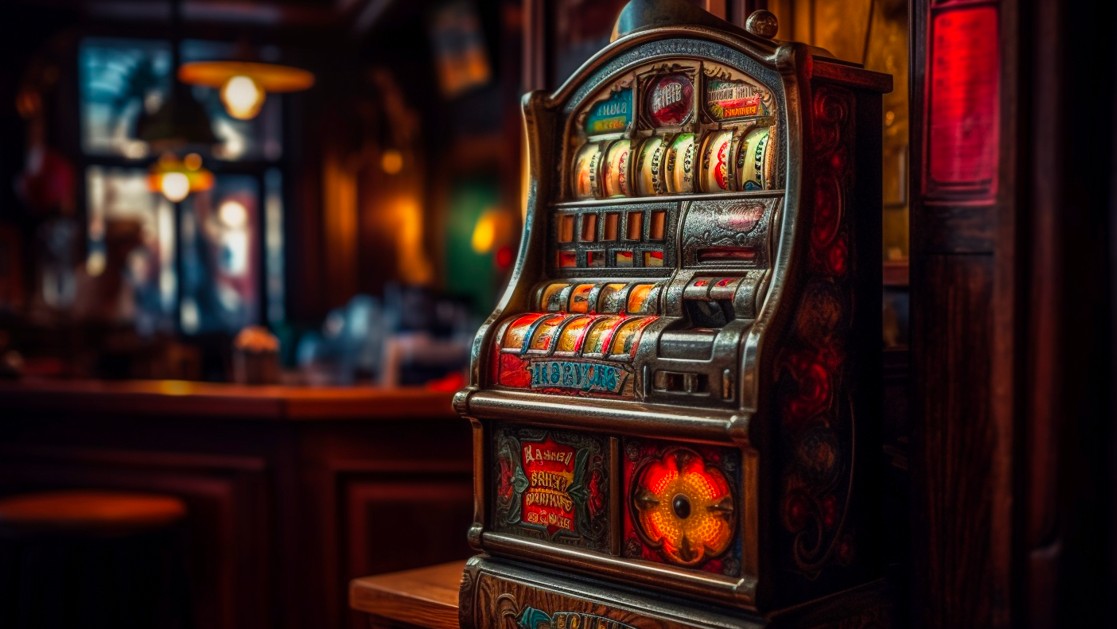
In the dimly lit cathedrals of chance we call casinos, they stand in rows like silent sentinels. Their flashing lights paint the faces of players in psychedelic colors. Their electronic jingles announce victories both real and imagined. They require no skill, offer no pretense of strategy, and reduce the complex human drama of gambling to its purest form: pull lever, wait, repeat.
The slot machine is the undisputed king of the casino floor. In the United States alone, slot machines generate more than 60% of casino profits. Globally, they account for hundreds of billions of dollars in annual revenue. Yet for all their ubiquity, these machines remain enigmatic artifacts—strange hybrids of 19th-century mechanics and 21st-century neuroscience.
This is the story of that machine. Not a guide to winning, but an exploration of how a simple gambling device became one of the most sophisticated psychological instruments ever created, and what our relationship with it reveals about the nature of desire, reward, and addiction.
Part I: The Birth of the Bandit
From Cigars to Cash
The slot machine was not born in the glitzy casinos of Las Vegas or the exclusive rooms of Monte Carlo. It was born in San Francisco in the late 1880s, the brainchild of a German immigrant named Charles August Fey.
Fey was a mechanic working in a factory when he began tinkering with a simple gambling device in his spare time. In 1895, he completed his masterpiece: the Liberty Bell. It was a simple machine—three spinning reels, each adorned with symbols: horseshoes, diamonds, spades, hearts, and a cracked Liberty Bell. Players would insert a nickel, pull a lever, and hope for three bells in a row. The maximum payout? Fifty cents or a free drink .
The Liberty Bell was an instant sensation. It sat in Fey’s machine shop, drawing crowds of workers eager to test their luck. But Fey, a practical man, refused to patent his invention, believing it was too simple to be worth the trouble. This decision would cost him millions as imitators flooded the market, spreading his creation across the country.
The Great Moral Panic
By the early 1900s, slot machines had become a fixture in saloons, barbershops, and brothels across America. Their popularity sparked a moral panic. Religious groups denounced them as tools of the devil. Civic leaders warned that they would corrupt the youth and destroy the working class. In 1902, a nationwide crackdown began, and slot machines were banned in state after state.
But the machine refused to die. Manufacturers adapted by creating a clever workaround: the “trade stimulator.” These machines no longer dispensed cash. Instead, they dispensed gum or candy, with the winnings printed on the inside of the wrapper. A cherry symbol meant cherry-flavored gum. A bar symbol meant a prize. The machines remained legal because they were technically vending machines, and players could exchange their prizes for cash at the back door .
This bizarre chapter in slot history explains the enduring iconography of the game. The cherries, bells, and bars that still appear on modern slot machines are ghosts of this era—relics of a time when gambling hid behind the innocent facade of chewing gum.
Part II: The Electrification of Chance
The Mechanical Age
For the first half of the 20th century, slot machines remained purely mechanical. The reels were spun by a spring mechanism, and the outcome was determined by the physical position of the reels when they stopped. These machines had a certain honesty to them. A skilled player could sometimes predict the outcome by watching the reels. The machines were simple, transparent, and limited.
The Bally Revolution
Everything changed in 1963. A company called Bally Technologies released a machine that would transform gambling forever: Money Honey.
Money Honey was the first fully electromechanical slot machine. It used electrical components to automate functions that had previously been manual. The biggest innovation was the bottomless hopper—a storage system that could automatically pay out up to 500 coins without attendant assistance. For the first time, machines could offer larger jackpots and faster play .
The electromechanical revolution paved the way for the next leap: the video slot. In 1976, the Fortune Coin Company installed the first video slot machine at the Las Vegas Hilton. It used a modified 19-inch Sony TV screen to display the reels. Players were initially skeptical. They missed the physical reels, the tactile feedback, the satisfying clunk of the mechanism. But the advantages were undeniable. Video slots could offer new game features, bonus rounds, and more complex paytables. They were cheaper to maintain and easier to update.
The Digital Dawn
The 1990s brought the final transformation: the online slot. The first online casinos launched in 1994, offering a handful of simple slot games. These early games were crude by modern standards—basic graphics, limited features, and slow internet connections. But they planted the seed for an industry that would explode in the coming decades.
Today, online slots are a multi-billion-dollar global industry. They offer thousands of themes, complex mechanics, cinematic graphics, and social features that would have seemed like science fiction to Charles Fey. The machine has left the casino floor and colonized our phones, tablets, and computers. It follows us everywhere, always available, always waiting.
Part III: The Architecture of Addiction
To understand the modern slot machine, one must understand a simple truth: these machines are not designed for winning. They are designed for playing.
Every element of a slot machine—from the speed of the spins to the color of the lights—has been carefully engineered by psychologists, neuroscientists, and marketing experts to maximize player engagement. The result is a device that some researchers have called “the most addictive form of gambling ever created.”
The Core Mechanism: Variable Ratio Reinforcement
The psychological power of slot machines rests on a discovery made by the psychologist B.F. Skinner in the 1950s. Skinner was studying animal behavior when he noticed something strange. If he rewarded a pigeon every time it pecked a button, the pigeon would peck only when it expected a reward. But if he rewarded the pigeon sometimes—randomly, unpredictably—the pigeon would peck frantically, obsessively, unable to stop.
Skinner called this variable ratio reinforcement. It is the same principle that makes slot machines so compelling. The player knows that a reward is possible, but they never know exactly when it will come. This uncertainty creates a powerful neurological response. Each near-miss, each almost-win, triggers a small release of dopamine—the neurotransmitter associated with pleasure and reward. The brain becomes locked in a loop of anticipation and disappointment, always chasing the next hit .
The Near-Miss Effect
The near-miss is one of the most potent psychological tools in the slot designer’s arsenal. A near-miss occurs when the reels stop just short of a winning combination—two cherries and a lemon, two sevens and a blank. Objectively, a near-miss is a loss. But subjectively, it feels like almost-winning. And almost-winning is, for the brain, almost as good as winning.
Studies using fMRI scans have shown that near-misses activate the same reward pathways in the brain as actual wins. They create a feeling of “almost” that encourages the player to keep playing. “I was so close,” the player thinks. “Next time, I’ll get it.” The machine has turned a loss into a motivational tool .
The Illusion of Control
Modern slot machines are masters of creating the illusion of control. They offer features that make the player feel like an active participant rather than a passive observer:
- Stop buttons that allow players to “stop” the reels, creating the illusion that their timing matters.
- Bonus rounds where players make choices, triggering the same psychological rewards as skill-based games.
- Pick-a-prize features where players select from a grid of options, believing their choice affects the outcome.
In reality, these features are pure theater. The outcome of a bonus round is determined the moment it begins. The player’s “choices” are meaningless—they are simply revealing a predetermined result. But the illusion of control is powerful enough to keep players engaged, spinning, and spending .
The Multi-Sensory Assault
Walk through any casino, and you will be struck by the sensory overload. The flashing lights, the ringing bells, the celebratory music. These are not accidents. They are carefully calibrated design elements.
Every sound a slot machine makes is engineered to reinforce behavior. The sound of coins falling—even on digital machines that don’t use coins—triggers associations with wealth and success. The celebratory music that plays after a win—even a small win—creates a feeling of accomplishment. The lights that flash in patterns just below conscious perception keep the player’s attention locked on the machine .
One of the most insidious design elements is the loss disguised as a win. This occurs when a machine celebrates a “win” that is actually smaller than the player’s original bet. The player bet $1.00 and won $0.50. They have lost money. But the machine plays celebratory music, flashes lights, and creates all the sensory cues of a victory. The player’s brain registers the event as a win, even though their bankroll has shrunk .
Part IV: The Mathematics of the Machine
Behind the flashing lights and psychological tricks lies a cold mathematical engine. Every slot machine is governed by two numbers: RTP and Volatility.
Return to Player (RTP)
RTP is the theoretical percentage of all wagered money that a machine will pay back to players over an infinite number of spins. If a machine has a 96% RTP, it will, in theory, return $96 for every $100 wagered over its lifetime. The remaining 4% is the house edge—the casino’s profit.
This number is often misunderstood. Players see a 96% RTP and think, “I have a 96% chance of winning.” This is incorrect. RTP is a long-term average, not a per-session probability. In a single session, anything can happen. A player could win big or lose everything. The RTP only asserts itself over millions of spins .
Volatility
If RTP tells you how much you might win, volatility tells you how you’ll win it. Volatility describes the risk profile of a game:
- Low volatility games pay out frequently, but the wins are small. Your balance stays stable, and you can play for a long time, but you’re unlikely to hit a massive jackpot.
- High volatility games pay out rarely, but when they pay, they pay big. You might lose for hours, then hit a single bonus round that multiplies your bet by 1,000x or more.
Choosing between low and high volatility is a matter of personality and bankroll. Patient players with larger budgets are drawn to high volatility games, chasing the dream of a life-changing win. Casual players prefer low volatility games, valuing entertainment over the jackpot .
The Random Number Generator
At the heart of every modern slot machine lies the Random Number Generator (RNG) —an algorithm that continuously generates random numbers, thousands per second. The moment you press “spin,” the RNG stops on a number, and that number determines the outcome of your spin.
The RNG is designed to be completely unpredictable and completely independent. The result of your last spin has no influence on your next spin. The machine has no memory, no mood, no sense of being “due” for a win. This is the fundamental truth that all gambling strategies must confront: there is no pattern. There is no system. There is only randomness .
Part V: The Social Slot – How the Internet Changed the Game
The internet has transformed slot machines in ways that Charles Fey could never have imagined. Online slots are no longer solitary pursuits. They are social experiences, shared across platforms and communities.
The Rise of the Streamer
Platforms like YouTube and Twitch have given birth to a new phenomenon: the slot streamer. These are players who broadcast their sessions live to thousands of viewers, sharing their wins, losses, and strategies in real-time. The most popular streamers have become celebrities, with fans who tune in nightly to watch them spin.
Slot streaming creates a peculiar form of vicarious gambling. Viewers experience the thrill of the chase without risking their own money. They cheer for wins, commiserate over losses, and feel connected to the streamer. For many, watching slots has become a form of entertainment in its own right—a safe way to participate in the excitement of gambling.
The Community of Hunters
The search for “hot” machines has become a collective endeavor. In forums, Telegram groups, and Discord servers, players share information about which games are paying, which sites are reliable, and which strategies are working. They develop their own vocabulary—”gacor,” “maxwin,” “jam hoki”—and their own rituals. A machine becomes “hot” not because of any mathematical property, but because enough people believe it is .
This social dimension adds a new layer to the gambling experience. Players are no longer alone with the machine. They are part of a tribe, united by a shared quest and a common language. The hunt for the big win becomes a communal adventure.
Part VI: The Philosophy of the Spin
Beyond psychology, beyond mathematics, beyond the community, there is something more fundamental about the slot machine. It is, in its own way, a philosophical object.
The slot machine is a pure expression of fate. There is no skill, no strategy, no intervention. You pull the lever (or press the button), and the universe (or the RNG) decides your fortune. In a world that demands constant agency and decision-making, there is something strangely liberating about surrendering to chance. For a few minutes, you are not responsible for your destiny. You are simply a passenger, watching the reels spin.
The slot machine is also a meditation on time. Each spin is a tiny narrative: hope, anticipation, resolution. Win or lose, the story ends, and a new one begins. Players can lose themselves in this rhythm, spinning away hours without noticing. The machine becomes a kind of clock, marking time not in minutes but in spins.
And finally, the slot machine is a mirror. It reflects our relationship with risk, reward, and desire. Why do we play? For the money? Studies show that most players lose in the long run. For the excitement? Perhaps. But maybe, on some level, we play because the slot machine offers something rare in modern life: a moment of pure, unmediated possibility. For the duration of a spin, anything can happen. The jackpot could be hit. Life could change. That moment of potential—that brief window between the spin and the result—is the real product the machine sells.
Conclusion: The Silent Partner
The slot machine has come a long way from Charles Fey’s San Francisco workshop. It has evolved from a simple mechanical device into a sophisticated psychological instrument, from a solitary distraction into a global social phenomenon. It has generated fortunes, destroyed lives, and inspired both devotion and contempt.
But through all its transformations, the machine has remained fundamentally the same. It is still a device that offers a moment of possibility in exchange for a coin. It still speaks to something deep in the human psyche—the hope that fortune might smile, that luck might turn, that the next spin could be the one.
The machine does not promise anything. It does not lie or cheat. It simply spins, indifferent to the hopes and fears of the humans who feed it. And we, the players, keep coming back. We keep pulling the lever. We keep chasing the dream.
Perhaps the slot machine’s greatest trick is not its flashing lights or its variable reinforcement schedules. Perhaps it is the way it makes us believe that we are playing the game, when in reality, the game is playing us.