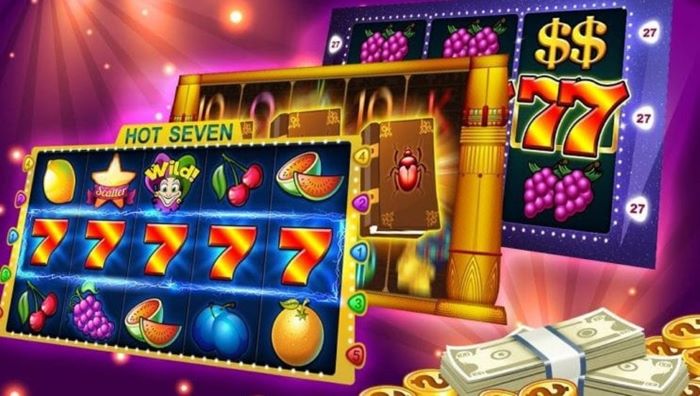
In the sprawling digital ecosystems of Indonesia, Malaysia, and beyond, a single phrase has come to dominate the lexicon of online gambling enthusiasts: “slot gacor.” Uttered in whispered Telegram groups, splashed across Instagram bios, and debated in endless YouTube live streams, the term has transcended its linguistic roots to become a cultural phenomenon, a promise, and for many, an obsession.
But what exactly is “slot gacor”? Why has this Indonesian slang term become the unifying code for thousands of players navigating the volatile world of online slots? And what does the obsession with finding these “hot” machines tell us about human psychology, technology, and the modern gambling landscape?
This article is not a guide to winning. It is an exploration of a phenomenon—a deep dive into the myth, the community, the technology, and the psychology behind the relentless hunt for the elusive “slot gacor.”
Part I: The Etymology of Desire – Where “Gacor” Comes From
To understand the phenomenon, we must first understand the word itself. “Gacor” is a fascinating linguistic artifact. It originated in the Indonesian bird-singing hobby, a competitive subculture where enthusiasts raise and train birds—typically cucak rowo or murai batu—to sing. A bird that sings loudly, frequently, and beautifully is described as “gacor,” an onomatopoeic word that mimics the sound of vigorous chirping .
In the context of online slots, the metaphorical leap is both simple and profound. A “slot gacor” is a machine that “sings” with frequent payouts. It is alive, vibrant, and generous. The term humanizes the cold, algorithmic machine, transforming it from a programmed device into a living entity that can be courted, understood, and predicted. This linguistic choice reveals a deep psychological need: players want to believe that the machine is not random, but responsive—that it can be befriended, coaxed, and eventually, conquered.
The phrase “slot gacor gampang menang” (a hot slot that’s easy to win) takes this a step further, adding a layer of accessibility. It’s not just about a machine that pays out, but one that does so effortlessly. It’s the ultimate fantasy: wealth without work, reward without risk.
Part II: The Architecture of Randomness – The Cold Reality of RNG
Before we get lost in the mythology, we must ground ourselves in technical reality. Every legitimate online slot operates on a foundational piece of technology: the Random Number Generator (RNG) .
The RNG is a complex algorithm that continuously generates random sequences, producing thousands of number combinations per second. The precise millisecond you press “spin,” the RNG stops on a combination, and that combination determines the outcome of your spin. This process is, by design, completely independent. The result of your last spin has zero influence on your next spin. The machine has no memory, no mood, and no preferences .
This is the cold, hard truth that the concept of “slot gacor” must contend with. From a purely technical standpoint, a machine cannot be permanently “hot” or “cold.” It is simply a random number generator, cycling through possibilities with mathematical indifference.
However, this technical reality does not invalidate the experience of players. What players call a “gacor” slot is actually the result of statistical fluctuation within a short timeframe.
The Accumulation and Distribution Cycle
Imagine a graph representing a slot’s payout cycle. Over the long term—over millions of spins—it will trend towards its designated Return to Player (RTP) percentage. If a game has a 96% RTP, it will, theoretically, pay out 96% of all money wagered over its lifetime.
But the line on the graph is not smooth. It is jagged, with dramatic peaks and deep valleys.
- The valleys are the “cold” phases, or what we might call “Accumulation Phases.” During these periods, the machine is, in effect, collecting bets. Players experience losses, and the machine’s internal “pool” grows.
- The peaks are the “hot” phases, or “Distribution Phases.” During these periods, the machine pays out the accumulated sums in clusters of wins. A player who sits down during a distribution phase will experience a string of good luck, frequent bonuses, and potentially, a massive jackpot .
To that player, the machine is undeniably “gacor.” They have witnessed its generosity firsthand. The challenge, of course, is that no one knows when a distribution phase will begin or end. The hunt for “slot gacor” is ultimately a hunt for the beginning of a peak—a quest to synchronize one’s play with the machine’s unpredictable rhythm.
Part III: The Community – How “Gacor” Became a Social Construct
If the RNG is the objective reality, then the community is the subjective experience. The “slot gacor” phenomenon could not exist without the sprawling, interconnected web of social media groups, forums, and messaging apps that amplify its mythology.
The Information Ecosystem
The hunt for “gacor” slots follows a predictable pattern across platforms like Instagram, TikTok, Telegram, and YouTube:
- The Viral Win: A player hits a massive win—a “Maxwin”—and posts a screenshot or video on social media. The caption is almost always the same: a variation of “Link slot gacor ada di bio!” (Link to the hot slot is in my bio!) .
- The Amplification: Other players share the post, comment on it, and ask for confirmation. The win is discussed in Telegram groups, analyzed in YouTube live streams, and dissected for clues about the “pola” (pattern) and “jam hoki” (lucky time) used .
- The Rush: Players flock to the linked site or game, hoping to replicate the success. The platform experiences a surge in traffic, and for a brief period, it becomes the “situs gacor” of the day.
- The Cycle Continues: Some players win, reinforcing the myth. Others lose and move on to the next viral post, chasing the next promise of “gacor.”
This ecosystem creates a powerful feedback loop. The community does not just report on “gacor” slots; it actively creates them through collective belief and shared experience. A site becomes “gacor” simply because enough people believe it is and are playing on it at the same time.
The Shared Language
The community has also developed its own rich vocabulary, a coded language that reinforces group identity:
- Pola Gacor: The secret spin patterns (sequences of manual, auto, and turbo spins) believed to trigger bonus features .
- Jam Hoki: The specific hours of the day when slots are allegedly more generous—often late at night or early in the morning .
- RTP Live: Real-time data shared within communities showing which games are currently paying out at high percentages .
- Maxwin: The holy grail—the maximum possible win in a game, often 5,000x or 10,000x your bet .
- WD (Withdraw): The ultimate goal—successfully cashing out your winnings.
This shared language transforms a solitary activity into a communal one. Players are not just spinning reels alone in the dark; they are participants in a collective quest, armed with shared knowledge and a common vocabulary.
Part IV: The Psychology – Why We Believe in “Gacor”
The persistence of the “slot gacor” myth, in the face of overwhelming technical evidence to the contrary, speaks to powerful psychological forces.
1. Pattern Seeking
The human brain is wired to find patterns. It’s a survival mechanism that helped our ancestors predict danger and find food. In the modern world, this same instinct drives us to see patterns in random data. When a slot machine pays out three times in a row, we see a “hot streak.” When it loses five times, we see a “cold machine.” In reality, it’s just randomness. But our brains crave order, so we impose it.
2. The Gambler’s Fallacy
This is the belief that past events influence future outcomes in a random sequence. “The machine hasn’t paid out in hours; it’s due for a win.” This fallacy is the engine that drives the “gacor” hunt. Players sit at cold machines, convinced that a distribution phase is just around the corner, unaware that the RNG has no memory and no sense of being “due” .
3. Confirmation Bias
When a player wins after following a “pola” or playing during “jam hoki,” they remember the win vividly. They share it online, they celebrate it. When they lose, they often dismiss it as bad luck or a sign that they should have switched patterns. The wins are remembered and amplified; the losses are forgotten or rationalized away. This selective memory reinforces the belief in “gacor” strategies.
4. The Illusion of Control
Gambling is, by its nature, an activity where the player has very little control. The RNG is in charge. The concept of “slot gacor” offers a comforting illusion of control. By learning “pola,” tracking “jam hoki,” and following community tips, players feel they are no longer passive participants. They are active hunters, armed with secret knowledge that gives them an edge. This illusion is psychologically soothing, even if it is technically false.
Part V: The Dark Side – When the Hunt Turns Dangerous
The “slot gacor” phenomenon is not just a harmless cultural curiosity. It has a dark underbelly, one that preys on the vulnerable and exploits the hopeful.
1. The Scam Ecosystem
The immense popularity of the term has created a fertile ground for scammers. For every legitimate platform, there are dozens of fraudulent ones designed to separate players from their money. Cybercriminals have been known to compromise legitimate, high-authority websites—government portals (.go.id) and educational institutions (.ac.id)—by injecting spam content related to “slot gacor.” A user clicking on what appears to be a trusted link might be redirected to a phishing site or a page designed to install malware .
2. Rigged Games and Withdrawal Nightmares
Many sites that market themselves as “situs gacor” are simply fronts for rigged games. They may let players win small amounts to build trust, but when a player hits a significant win and tries to withdraw, the problems begin. Accounts are frozen, withdrawal requests are ignored, and customer support disappears. The “gacor” site was never gacor; it was a trap .
3. The Cost of Addiction
The relentless pursuit of “gacor” slots can fuel gambling addiction. The 24/7 accessibility of online platforms, combined with the social reinforcement of community groups, makes it easy to lose track of time and money. Players chasing the next “Maxwin” can quickly spiral into financial ruin, accumulating debt and alienating loved ones. The promise of “gampang menang” (easy win) becomes a cruel irony as losses mount.
Part VI: A Rational Approach – Navigating the Gacor Landscape
So, how should a player navigate this complex landscape? The answer lies not in rejecting the “gacor” concept entirely, but in reframing it.
1. Understand the Math
Accept that the RNG is the ultimate authority. There is no “secret formula” or guaranteed “pola.” However, you can use your knowledge of RTP and volatility to make informed choices. Prioritize games with high RTP (96%+) and choose a volatility level that matches your bankroll and risk tolerance .
2. Use Community as a Tool, Not a Prophet
The community is a valuable source of information, but it should not be treated as infallible. Use “RTP Live” data to see which games are currently trending. Listen to discussions about “jam hoki” and “pola,” but treat them as strategic frameworks for structuring your play, not as guaranteed paths to profit. The community can tell you what’s happening, but it cannot tell you what will happen.
3. Master Bankroll Management
This is the single most important skill. Before you play, set two hard limits:
- A win limit (e.g., “If I double my money, I stop”).
- A loss limit (e.g., “If I lose my initial deposit, I stop”).
Stick to these limits ruthlessly. Use the “jeda 5 menit” (5-minute break) strategy after a big win or loss to reset your emotions .
4. Prioritize Safety
Never trust a link from an unverified source. Research platforms before depositing money. Check domain age, read independent reviews, and ensure the site uses proper security protocols (HTTPS). If a site makes promises that sound too good to be true, they almost certainly are .
5. Redefine “Winning”
The real “Maxwin” is not a massive jackpot. It’s the ability to walk away. It’s the discipline to stop when you’re ahead and the wisdom to stop when you’re behind. It’s treating the game as a form of paid entertainment, where the cost of the experience is the money you are willing to lose. If you can do that, you have already won, regardless of what the reels show.
Conclusion: The Song of the Machine
The “slot gacor” phenomenon is a fascinating window into the human psyche and the digital age. It is a story of how a simple slang term can evolve into a cultural touchstone, uniting thousands of players in a shared quest against the cold indifference of an algorithm.
The machine does not sing. It does not have moods. It is a random number generator, cycling through possibilities with mathematical precision. But the players sing. They share, they strategize, they hope, and they dream. The “gacor” slot is not a place; it is an idea—a collective fantasy of control and reward in a world of randomness.
The smart player understands this. They know that the hunt for “gacor” is ultimately a hunt for an illusion. But they also know that within that illusion lies a community, a language, and a form of entertainment that can be enjoyed responsibly. The key is to listen to the song without being consumed by it—to enjoy the music while always knowing when it’s time to turn off the machine and walk away.